
Redefining Education: How AI Will Transform Learning
Discover how AI will reshape education, replacing exams with creativity-driven learning and empowering students to solv…
Imagine a classroom where students no longer anxiously await exams, where the old model of “questions and answers” is turned on its head. A world where AI isn’t just a tool but a learning companion embedded seamlessly into every aspect of education. That future is closer than we think.
For developers today, AI-powered tools like GitHub Copilot or the AI features in VS Code have transformed how we code. These systems don’t just give answers—they guide, suggest, and enable creativity.
Now, imagine a similar system for every field of study: medicine, architecture, literature, or engineering. AI would act as a personal assistant for students, helping them explore ideas, check their reasoning, and provide instant guidance when they get stuck.
In this AI-driven future, traditional exams might become obsolete. Instead of testing whether students can memorize facts, education could focus on how students apply knowledge.
What if, instead of asking questions, educators provided the answers and observed what students create with them? The true test would no longer be recall—it would be creativity, critical thinking, and problem-solving.
Example:
AI assists with calculations, simulations, and suggestions—but the student’s ingenuity drives the project.
Embedded AI shifts the focus from rote learning to doing. Students can experiment, fail, and iterate quickly with AI as their guide. Mistakes are no longer punishable—they’re instructive.
This environment cultivates curiosity, resilience, and practical intelligence rather than just memorization.
Moreover, AI can personalize the learning experience. Each student progresses at their own pace, exploring topics in greater depth or receiving extra guidance where needed. Education becomes adaptive, not standardized.
The world we are preparing students for already expects them to interact with AI, data, and technology constantly. By embedding AI into the learning process, students gain not just knowledge but the ability to collaborate with intelligent systems—just as developers now collaborate with AI in their daily work.
This model also changes the role of teachers. Instead of being the sole source of knowledge, teachers become mentors, facilitators, and curators. They guide students in asking meaningful questions, exploring complex problems, and interpreting AI-assisted insights.
The future of education isn’t about memorizing answers; it’s about learning to think, create, and innovate with AI as a partner. Exams may fade into history, replaced by projects, explorations, and real-world challenges.
Just as AI has become indispensable to developers, it will soon become an inseparable part of learning itself—empowering students to achieve what was once unimaginable.
Education isn’t just changing—it’s evolving into something more dynamic, more creative, and infinitely more human.
The goal of early childhood education should be to activate the child’s own natural desire to learn.

Coming soon...


Discover how AI will reshape education, replacing exams with creativity-driven learning and empowering students to solv…
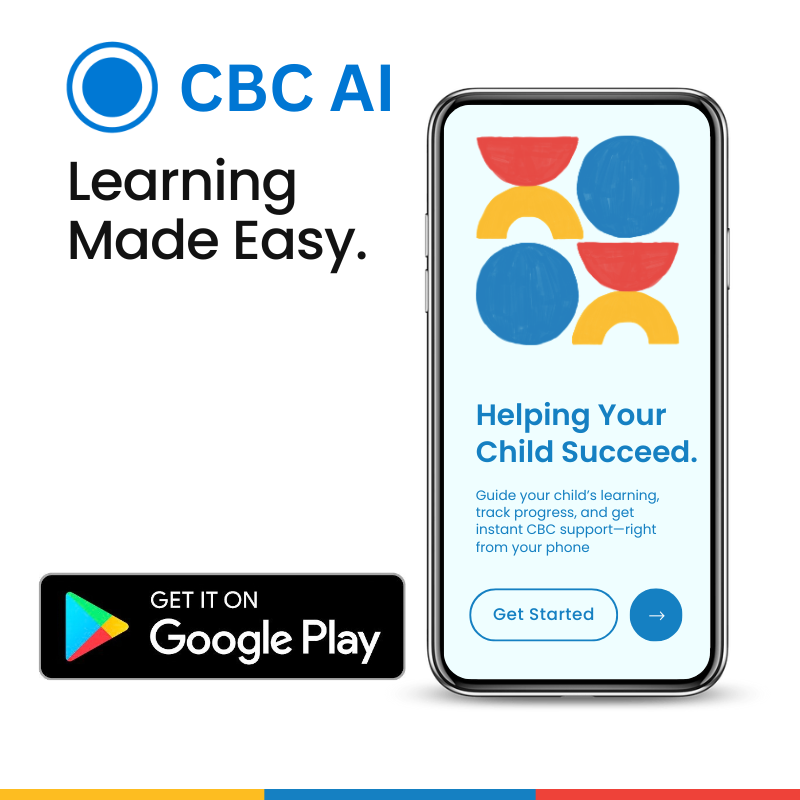
CBC AI launches its new mobile app on Google Play, giving teachers and parents faster access to CBC learning support an…
CBC AI simplifies Competency-Based Curriculum assessments in Kenya by reducing teacher workload, digitizing records, an…